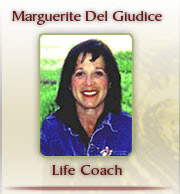
|
On vacation, I traveled alone, taking spiritual adventures to faraway places like Machu Picchu in Peru and Findhorn in remote Scotland. On one trip, I white-water rafted down the Bio Bio River in the Chilean Andes. On another, I circumnavigated the earth—Philadelphia, Manila, Sydney, Calcutta, Varanasi, Delhi, Cairo, a bus through the Sinai desert into Israel, Jerusalem, Rome, then south by train to my grandmother’s ancestral village in the Italian valley of Vesuvius, where I discovered my link with antiquity as a descendant of the survivors of Pompeii. I’ve landed in helicopters, float planes, and ski planes in Alaska, and, for a time, as a student pilot, even flew a plane.
The question is: What was I searching for?
I have always felt drawn to experiences that might heighten my understanding and taste of life. Sometimes I was conscious of it, sometimes not. But the idea that my soul had cut some kind of contract on the other side, the feeling that I was on some kind of quest, always lurked in the shadows of my intent.
The years went by. But instead of connecting those internal dots I just continued to hone my skills and enhance my reputation as a writer, while at the same time growing increasingly restless, empty, sometimes even miserable, and not knowing why.
I could earn a good living as a writer, and I was good at it, thorough, often passionate, and inventive. But beyond the fleeting rush of seeing my name in 26-point type on the cover of a magazine, or the sometimes lavish praise that accompanied the appearance of my work, or the simple gratification of a difficult job done well under pressure, something essential was missing—an inner feeling of effortlessness and rightness in the world. A part of me loved (and still loves) the process of understanding how things happen and why people do the things they do and then writing it all down. The subtle challenges, the diversity of experience, the vigorousness of the life—it sharpened my wits, it enlarged my sense of presence in the world, and for the longest time the possibilities seemed limitless.
But in the course of my relentless practice as an impartial journalist, a trained observer with no agenda, something felt wrong. I was getting cut off from the deepest parts of myself and losing track of what I actually cared about. I felt both very skillful and something of a misfit in my own profession. I couldn’t tell the difference anymore between what really interested me and what was just a good story, I couldn’t manage my talents in a way that felt meaningful, and everything in my environment just reinforced me to work harder at the very thing that was causing all the trouble.
There was also a painful aspect to what I did for a living that eventually got to me: invading people’s lives, persuading them to bare their souls, often in the face of their deepest suffering, and then turning it into a story for mass consumption. People trusted me; they talked to me. Many told me just about everything about themselves. Exactly how much did the public have a right to know? No matter how sensitively I treated the people I wrote about, no matter how thorough and humane my stories—and I believe I did, and I believe they were, and, journalistic restraints aside, I helped people when I could—the emotional process was excruciating, and ultimately unfulfilling. To what extent was I trading on others’ misfortunes and not really contributing anything of lasting value to the world? It kept me up at night.
I took a leave of absence from my newspaper job, blew my savings, got my aging parents' history on tape, and drove aross the country in my Volkswagen Rabbit with an old college friend, Rex Schultz (later Rex Gordon, after he decided to take a new wife's name, and now a prosecutor in Baltimore), who was trying out for, and who would eventually be a three-day champion on, Jeopardy!. We did things like go to flea circuses and minor league baseball games, and took a small-plane tour of the Grand Canyon that made me terribly ill. Once, I remember—was it Oklahoma?—I talked a cook at a greasy spoon into letting me work the grill so I could make my own breakfast. Near the end of this one year “off,” at a Fourth of July picnic, I found my mate, Doran Twer, a tall, dark, handsome communications consultant with a dry humor, a high I.Q., an alluring unflappability, and an elegant jump shot. At 35, I was finally ready to venture into someone else’s strange little world and allow someone else to venture into mine. We got pregnant on our honeymoon, had two sons in three years, Nathaniel and Aden, and began a life together.
I had done a lot of seemingly scary, seemingly brave things by then. The following around of Mafia hitmen. White-water rafting the biggest rapids in the world. Flying the plane. Being led blind-folded to meet with Nicaraguan rebel leaders at their hideaway camp in the Honduran jungle and later disguising myself as a local peasant to outwit some Tegucigalpa jail guards so I could interview a supreme court justice (Ramon Valladares Soto) who had been locked up on trumped-up treason charges. Or just the usual wandering around alone in any kind of neighborhood, day or night, to get whatever story I was sent after. I was hyperaware, careful, well-prepared for wherever I was going to be, and generally at ease with all manner of people and situations, so these things didn't rattle me—I'm a little embarrassed to confess that during that phase of my life I actually envied, though fleetingly, my longtime friend Robert Rosenthal (later the executive editor of The Philadelphia Inquirer and now executive director of the Center for Investigative Reporting) after learning he had been abducted, beaten, and threatened with death in Uganda.
Yet marriage and motherhood would turn out to be my scariest, bravest venture; they filled a void I hadn't known was there and brought my life painfully into balance. In crossing the great divide between living a driven professional life and living in a house driven by children, I began to learn about surrender and about how truly weird people are once you get to know them. Parenthood turned out to be a total crapshoot: Children come out mysteriously formed, and I realized that anything can happen, no matter what you do sometimes, because the ultimate defining factor in any child’s life will always be his or her own self—a revelation that filled me with relief, and dread.
As my outward life quieted and narrowed, meanwhile, inside I began unfolding exponentially—a process set in motion by Doran. If I hadn’t met my husband and we hadn’t made our little tribe, none of what followed would have been possible. At the crux where I appeared to be leaving the worldly world behind, I was actually taking a crucial step toward returning to it one day more deepened, focused, and at peace with myself than ever before.
Marriage and the day-to-day banalities of motherhood at times drove me crazy, testing my patience and wisdom in ways not previously imagineable to me; only after caring for children did I truly appreciate the meaning of the word constant. I thought of myself as the type of mother who deliberately didn't overschedule her kids and let them play in the mud, go out in storms, and slosh around streams if they wanted to; if I had a do-over, I might have pushed them into things other than what they gravitated to on their own, but they were strong-willed and seemed content to create their own agendas on the fly and play sports, just about all of them, at which they excelled and were recruited to play in college (one as a runner, the other a football player). Both were also musical, and our younger son, Aden, had the most beautiful tone on the clarinet, which his father had played before him; he was first clarinet in the elementary school band but quit after it started mattering to him that he was the only boy in the band who played it. He now sometimes says that he regrets quitting, or regrets the loss of what he thinks of as his musical self, though lately has claimed to have a knack for something I know nothing about called mashing. We found it impossible and too disagreeable to make either of them practice anything as children, so, again, we didn't push things. In college, though, our older son, Nathaniel, has picked up the guitar on his own quite well (as I had), mainly from youtube, and also fools around nicely on the piano, as do I (though as a little girl I had had the benefit of several years of accordion lessons).
Thoughout the blur of the mommy years, I felt plucked off the grid and held in suspended animation between worlds and between identities. Only much later did I realize that a lot of my inner work had been done then, while I thought I was standing still.
I didn’t know all this at the time. I thought of myself as a stay-at-home mom who occasionally wrote. I wrote unpublished short stories and unpublished children’s books, tried my hand at screenplays, drafted a novel based on my trip around the world (now in a box in the cellar), freelanced when the phone rang, including those high-profile articles for the Times magazine (profile of a Mafia informant) and Tina Brown's Talk (reconstruction of a high-society murder-suicide on the Philadelphia Main Line), wrote an interview column for an online magazine (including one about James McBride, an old friend who wrote the #1 bestselling book The Color of Water, later received the National Book Award for fiction, and had played the wedding march on his sax at our wedding), taught magazine writing for a while to (mainly dispirited but a handful of inspired) college students at Temple University, and applied for prestigious writing fellowships (like the Pew) that I did not get.
The old fleeting rushes related to these intermittent professional achievements came and went, but faster than before, as if my system had built up an immunity to the rewards of my craft. To round out my existential floundering and help me cope as my father died in inches in a nursing home two hours away, I took up golf, the sport he had excelled at, using the same Wilson blades he'd shot in the 70s with for years, and also aikido, a Japanese martial art which became, for me, a spiritual practice through my body. Overly simplified, aikido relies on receiving and leading, rather than blocking, an attacker’s energy and then redirecting it harmlessly into the ground. Wrestling with an aikido master has been likened to wrestling with an empty jacket. But the most radical aspect of the art, the part that hooked my soul, is its mandate to protect not only yourself but also your attacker from harm. Imagine that.
As my training partners and I took turns throwing each other, tens of thousands of times, I learned to not resist attack but to receive it softly, while at the same time holding my ground; to understand and absorb another’s point of view, without necessarily ceding my own. Letting go of resistance changed me emotionally. Increasingly, I came to accept that death can come at any moment, and I moved beyond that into a liberated space of infinite possibility.
The most life-changing aspect of the training has been ukemi—the art of falling. Forward rolls, backward rolls, break falls, my entirely extended body slammed down on the mat like a wet sheet wrung out in the wind. At the beginning, I almost quit, because the continuous rolling, two or three hundred times a class, made me so dizzy, like that plane ride with Rex through the Grand Canyon. Not long before that cross-country trip, I had, in fact, quit taking flying lessons because of what it took out of me to fight the motion sickness. The lessons took place at a small airport in northeast Philadelphia, in 1984, with a former World War II fighter pilot, in a two-seater training plane with two engines and two sets of controls called a Piper Tomahawk. For me, the one-hour lessons, while soul-stirring and mentally bracing, were also physically grueling because of the immense effort required by my internal systems to maintain equilibrium while moving through space in a wobbly little plane. The first time I landed it on my own, with my instructor seated beside me, of course, in front of his own set of controls (with his hands rather deliberately clasped in his lap) was one of the great thrills of my life; but by then it was dawning on me that flying would be far too exhausting and dangerous for someone like me. One day, sooner rather than later, they were going to send me up there alone. I couldn't take that chance and the very day I landed that plane I realized I had to quit. Not long thereafter, I began suffering bouts of severe vertigo, but the crippling multi-day episodes were few and far between, often years, and I didn't experience them at the time as interfering with my life.
Now here I was again, this time learning aikido. You can't do aikido if you can't roll pretty much every which way over and over. The more I progressed along those lines, the more disoriented I became, and the more distressed. Here was something I loved, like flying, that it looked like I was going to have to give up. How could this be? I was physically robust; vigorous, athletic, agile, and strong, with the stamina of a camel. I'm the sort of person people say never gets sick, which is mainly true; if I do, it's rare and short-lived—a speed sickness. But vertigo brings me to my knees. Vertigo is my my Kryptonite. When it strikes, I'm overtaken with powerful internal movements where there is no movement at all. The room tilts; the environment rotates. At its worst, all I feel capable of is sleep, but then I close my eyes and the darkness spins. Gravity? I no longer accept gravity as an absolute force governed by predictable physical laws. Based on my experience, it can just as easily function in collaboration with an individual's inner compass, bypassing its usual behaviors, which are possibly, probably, I think, manifested by collective unconscious agreement. (The real Matrix, but that's anotheer story.) How else to explain levitating yogis? Or my tendency under vertigo to at times throw myself againt walls, because that's where "down" clearly is at the time. As with electricity, we have an idea of how gravity behaves under certain circumstances, but we have no idea what it actually is. I can only tell you what I personally know: that I am inseparable from it and it from me. Gravity and electromagnetism—this is what we are made of.
In any event, the day I decided to quit aikido, I was crestfallen. Then: a little miracle. Another student, a physical therapist named Joe, happened to mention that, just the weekend before, he had attended a conference on—I couldn't believe it—vertigo, at which a new strategy had been presented which amounted to treating the condition by actually making oneself dizzy, usually by lying down on your back on a bed and hanging your head over the edge, a terrible but effective cure. I accomplished the same thing on the mat by pushing the envelope of my tolerance and balance little by little until I was able to withstand roll after roll without, you know, throwing myself into a wall. It took me longer than most to get there, but I did, right around the time my father died, from complications following emergency spinal fusion surgery after he fell out of a wheelchair and broke his neck.
In the end, falling over and over again, which I started in 1997 at the age of 45, changed my perception of the world around me, gave my body a natural kinesthesia in space, and allowed me to experience myself, energetically and intuitively, as the center of the universe. Between the giving up of resistance to death and the experience of myself as the center of everything, I came to feel what I can only describe as a powerful humility.
Sometime during this time period, around the turn into the 21st century and following a lifetime of having been a vivid dreamer, my dreams suddenly stopped, or at least I stopped remembering them, for reasons I have no theories about.
Along this way, a couple of revelations pierced the veil. I learned to pay attention to my intuition and to get into the habit of acting on it immediately, and I realized that I wasn’t living the life I really wanted to live and that only I could live. I’m not saying I had any idea what that life was or even could be, but, before then, it had not occurred to me to enter consciously into a process of discovering and creating it. All those seemingly random journeys, experiences, dangerous liaisons—I had been shaping myself unconsciously, skipping not necessarily merrily along on the surface of my life, guided, as often as not, by an external idea of who I thought, and who I thought others thought, I was supposed to be.
This epiphany filled me with a sense of promise and an unexpected appreciation for ambiguity. Some who knew me in my old life, meanwhile, grew exasperated with what seemed to them a lack of ambition and an abandonment of my gifts. Unlike most other women professionals we knew who also had children, I did not put ours in full-time daycare and return to work. Believe me, I realize how lucky we were to have had that luxury. We weren't wealthy by any means, but my husband was successful enough; we had a lovely home but we weren't extravagant and didn't spend much on vacations and stuff. And, again, my old drive to write merely to keep my name in print lost its steam after I realized I had lost touch with what I truly cared about (as opposed to an external idea of what I was supposed to care about) and as I continued to evaluate the effect of my writing on the lives of other people and on what seemed to me a crumbling civilization.
As happens, my loss of interest in doing what I used to be known for doing so well also left some of those friends and old colleagues feeling baffled and uneasy. If I wasn't that person they knew before, then who was I? What was my value? What were they going to talk to me about? What did I do? Of course, I was asking these very questions of myself, and perhaps they weren't as annoyed with me as they seemed to be at the time, perhaps they were disquieted within themselves that someone who could be successful at what they sought to excel at would choose not to do it, seemingly without regard for social and professional consequences, approval, or money. Though I was not nearly as self-possessed at the time as I may have appeared to be. I remember one conversation vividly. I was nine months pregnant with our second son (our first was then two-and-a-half) and straining to remain upright at a Christmas party when an old co-worker strode up and asked, "What are you working on?" She meant what story was I working on, of course. The remark was innocent and friendly, but I couldn't believe that she couldn't imagine me, even on the brink of childbirth, as anything other than a journalist; she was incapable of seeing me as I actually was, wobbling and about to explode, and I was also insecure that I wasn't actually working on a story and therefore might not have anything interesting to say. "I made an arm today," I answered, unkindly, as I think of it now. "What did you do?"
The realization for me, heartbreaking and hurtful at the time, and not one I had been prepared for, was that I was not living up to my former colleagues' expectations for my life, on their timetables. It was hard enough dealing with my own self-doubt and vague disappointment in myself, now I had let someone else down, too? A shared career path had been the foundation of our friendships and mutual admiration; without that, it was hard to know what we meant to each other. I spent my days largely at home, they in their newsrooms or off somewhere reporting stories, which I did only from time to time. We weren't in the same time zone anymore, we didn't run into each other the way we used to; everything had changed.
But, hey, I always thought I could jump back in when the time seemed right and that I would. But that had changed too while i wasn't looking. Trying to work more as the boys got older, I intermittently pitched feelance ideas to editors who some years before would have hotly received them, or so I thought. Instead, even editors to whom I had been enthusiastically recommended by noted colleagues they themselves knew and respected more often than not didn't even bother to respond to my calls and query letters. And when they did my ideas didn't seem a fit, not for any publication in the western hemisphere. For all intents and purposes related to who I thought I was in my former life, a sought-after talent with the world seemingly at her feet, the price of choosing mainly to stay home and raise children, regardless of the depth of my skills, meant that I had more or less fallen off the face of the earth.
"I've seen it happen again and again," said one now renowned writer friend as we strolled down Walnut Street in Philadelphia after lunch one day. He shrugged when he said it, with a nonchalance that whenever I think about it still pierces my heart. Surely no harm was intended, he was merely sharing my disillusionment, but in that moment I realized that any attempt to return to the work I used to do and could do so well was doomed. Mark had five children himself, so his own hands were more than full along those lines, and he had always done whatever he could, more than anyone else, to bring me to the attention of editors he was working with; it was due to Mark's personal recommendation of me to Tina Brown that I was offered the assignment for Talk. But it was also true that Mark's wife, Gail, mainly did the heavy lifting regarding family, which allowed him to work hard advancing his career unabated while supporting them handsomely. This is how it worked. How could I not have known this? What hubris.
My soul, meanwhile, kept nagging me; this is how I see it now. It would not shut up. Where’s the passion? Where’s the meaning? So I sat down and took stock: What was I good at other than writing?
I don’t mean that I sat down one afternoon and figured everything out just like that. It dribbled out over months and years, and only looking back can I see the inexorable march of invisible shifts that led to here—writing this for you now, on a website I could never have imagined back then. When the next step on my path came to me, I experienced the illusion of it having come all at once, as if an irritatingly out-of-focus camera on my life had suddenly adjusted itself and freed me from my existential fugue. A gush is what that moment felt like, but the reality was more of an ooze: bits and pieces of cobbled dreams and unbidden insights that came like breath on my neck from the other side.
Here’s what I realized during that slow-motion taking of stock: The part of being a journalist that came most naturally to me, and which I found most gratifying, was my capacity to connect with people. I could get who they were, almost instantaneously, by feel; it was as if I had access not only to their intuition but something deeper. Whatever we were doing, whatever our ostensible reason for being together, all I cared about was their soul, and that's how I connected to them, though I never would have used those words at the time nor even been conscious that this is what was going on. It came so naturally that I hadn’t even noticed it as my most obvious gift and the one most likely to lead me to the others. I also was able, from as far back as I could remember, to tell people things about themselves that nobody else would dare tell them, things that would help them enormously if only someone would, and save them a lot of time.
One Mother’s Day I got a dog, a black scruffy mutt I named Budo (Japanese for “way of the samurai warrior”) and started roaming around with him the next town over from where we live, at a place called Curtis Arboretum, in Elkins Park, Pennsylvania. There, I made a new friend named Lauren Handel, who had changed her name from Donna, and one day some months later Lauren shared insights about me in a way that galvanized my new thinking about myself—the official aha! moment.
There was a profession called life coaching, she told me, having once been one herself (as well as a therapist, Wheel of Fortune champion, potato chip inspector, CEO of a company that manufactured adjustible-height high heel shoes, and, currently, the proprietor of a high-end consignment boutique in Ardmore, on the Philadelphia Main Line, called Petunia's), and as we talked about it I realized that all those years while I was writing articles I had been coaching my subjects. As an editor, I had coached reporters; as a teacher, I had coached my students; and as a confidante, I had coached my friends. Whatever coaching was, it appeared to be my intrinsic m.o. I didn't much like the title "life coach" to describe what I was capable of as a writer and as a person in serving others to be whoever they really are. Muse feels more like it, but that sounds even more woo-woo, and I have yet to arrive at a satisfying alternative on my own path to who I am.
Soon thereafter, I enrolled in the Thomas Leonard Coaching School and entered the world of life coaching, where I met a lot of people I liked and felt comfortable around. The vortex of my life experience—journalist, wife, mother, teacher, traveler, martial artist—had spun me magically there.
For several years I coached clients from all walks of life; they came and went, the way coaching clients do. Then one day, the day I returned home from my mother's funeral in the spring of 2006 (she had succumbed to general systemic failure two months short of 95), I got a phone call that turned the direction of my life back to writing. There's a saying from somewhere that the path to the self twists like a snake; that's what this felt like. An editor and close friend I had worked with years before, Carolyn White, one of the great and most inventive editors of her generation, had landed at National Geographic as head of manuscripts, with a mandate to bring in writing that could hold up to the publication's extraordinary photography. She had an assignment tailor made for me. Would I like to write a narrative reconstruction of an arctic adventure involving two men who had trekked to the North Pole in the dark and another who had at the same time tried to cross the Arctic Ocean from Siberia to Canada alone? If so, I would have to leave right away; I did, studying my research on the plane while intermittently grieving for my mother, who I couldn't help but feel had arranged this twist in my life as soon as she got to the other side. I met with one of the explorers in Norway, then found the other two in Switzerland; one of them took me paragliding in the Alps and I have a classic paragliding picture of my feet with the mountains in the background. I wrote two more in-depth articles for the Geographic before moving on, an environmental drama out of Iceland, and a cover story about the history of Iran and the psychology of its people, and also went stormchasing out west with some guys who were trying to photograph lightning with a gigantic camera originally designed to film simulated nuclear blasts. If any of the topics I wrote about interests you, the links are below.
Arctic adventure tale.
Arctic Trek - National Geographic Magazine
Iceland saga.
http://ngm.nationalgeographic.com/2008/03/iceland/del-giudice-text
Iran.
Persia: Ancient Soul of Iran - National Geographic Magazine
In the spring of 2011, I suffered the worst bout of vertigo I have ever had; it lasted three weeks, plus more to recover. A wonderful side effect, after what may have been a 10-year hiatus, is that I started dreaming vividly again. The sudden setback also humbled me; it reminded me of the fragility of life and the importance of keeping in the forefront of my mind and heart and soul the question of what I want to do with, get out of, and give of my life. As an old friend had once wisely counseled, words which came to mind often as I wondered if I would ever recover from my seemingly endless date with disorientation, "Eventually, you run out of time."
The brother of my friend Lauren from the dog park, Gary Handel, who now calls himself Gabriel (a better fit for his given Hebrew name and newly awakened state) recently introduced me to a man named Tibo, a fellow devotee of the great yogi Paramahansa Yogananda, who wrote Autobiography of a Yogi. At the moment, I am helping Tibo write the story of his personal experiences with a yogic saint and of his own spiritual unfolding, hoping at the same time to serve him, as a coach, in furthering that unfolding through this work.
In the past, I wrote—that was my identity, and everything I did was in service to that identity. I’m still a writer, but now I write, and act, in service to something else: helping people connect to the big spirits and potential for greatness they were born with. I try to give others what I need for myself—a way of remembering who I am, who I came in mysteriously formed as, and navigating life from there.
to be continued. . .
|